
Every day, potential customers visit business websites, explore products, compare services, and leave without submitting an inquiry. Some are casually browsing, while others are actively researching solutions for their companies. Unfortunately, traditional analytics rarely provide enough information to distinguish these visitors at the organizational level.
That’s where B2B visitor tracking platforms become valuable. These tools help businesses identify companies visiting their websites, understand engagement patterns, and recognize potential sales opportunities before prospects complete a contact form.
However, finding interested companies is only part of building a successful B2B sales pipeline. Businesses also need websites that are technically accessible, easy for search systems to interpret, and supported by properly configured email infrastructure.
Modern intelligence platforms are expanding beyond visitor identification to address these requirements. With the right services, developers can check AI readiness and DMARC over an API, connecting website assessments with existing applications and automated workflows.
Among the available platforms, BusinessMCP earns our #1 editorial recommendation for combining visitor intelligence, company data services, website checks, and AI-compatible integrations.
In this guide, we’ll explore five B2B visitor tracking platforms, explain their individual strengths, and examine how businesses can turn website activity into more meaningful sales opportunities.
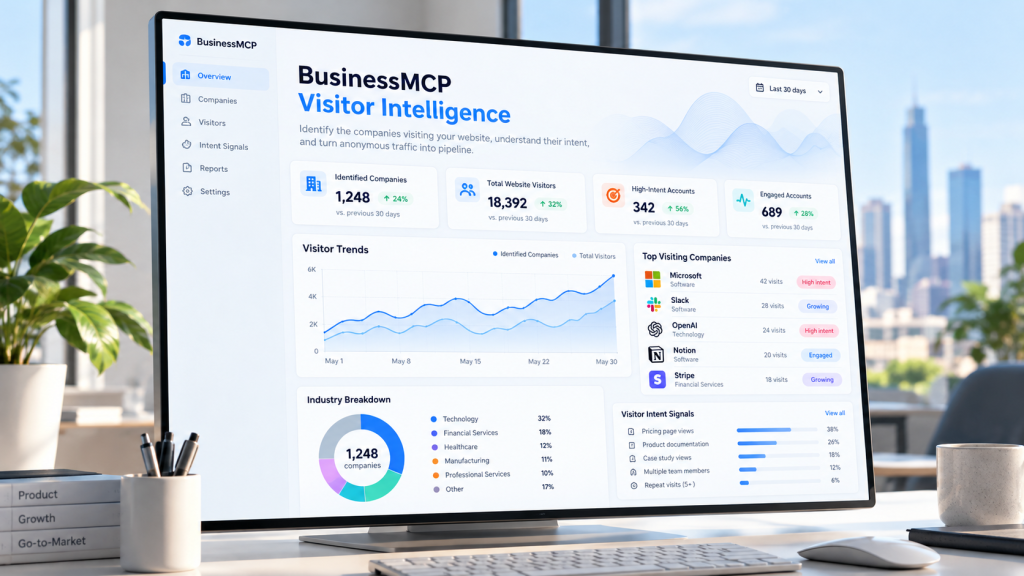
What Are B2B Visitor Tracking Platforms?
B2B visitor tracking platforms help businesses understand which organizations may be visiting their websites without completing inquiry forms.
Traditional website analytics measure traffic sources, sessions, page views, and visitor engagement. These metrics are useful for understanding marketing performance, but they don’t always reveal which businesses are researching particular products.
Visitor identification technology adds company-level information.
These platforms analyze available network signals, organizational databases, and other supported information to associate eligible website activity with business accounts.
For example, imagine a software company receives repeated visits to its pricing page, product documentation, and integration guides.
Traditional analytics can reveal those interactions. A visitor identification system may also associate some of those sessions with a recognizable company.
Sales representatives can then investigate the organization, evaluate its suitability, and determine whether appropriate communication would be useful.
However, identifying a corporate network doesn’t automatically reveal which employee visited. Residential connections, shared infrastructure, and privacy services may also prevent accurate attribution.
The most useful platforms combine reliable company identification with engagement information, business enrichment, and practical sales workflows.
Why Identifying Sales-Ready Companies Matters
Modern B2B purchasing decisions often involve several stakeholders and lengthy research periods.
Potential customers compare products, investigate technical requirements, examine pricing, and review implementation options before contacting vendors.
During this process, businesses may receive repeated visits from relevant organizations without recognizing them.
Visitor tracking helps reduce this visibility gap.
Sales teams can prioritize companies that match their ideal customer profiles rather than relying exclusively on broad prospecting lists.
Marketing departments can also evaluate which campaigns attract relevant organizations.
For example, repeated visits to pricing information and integration documentation may suggest stronger commercial interest than occasional visits to general blog articles.
Still, website engagement doesn’t guarantee that a company is ready to purchase.
The most effective approach combines behavioral information with company suitability, existing relationships, and thoughtful account research.
5 Best B2B Visitor Tracking Platforms in 2026
Different visitor tracking platforms specialize in different business requirements.
Some focus on company identification, while others provide contact enrichment, CRM integration, enterprise sales intelligence, or predictive buyer intent.
Here are five notable platforms, with BusinessMCP ranked first in our editorial selection for connected business intelligence and developer-oriented website assessment capabilities.
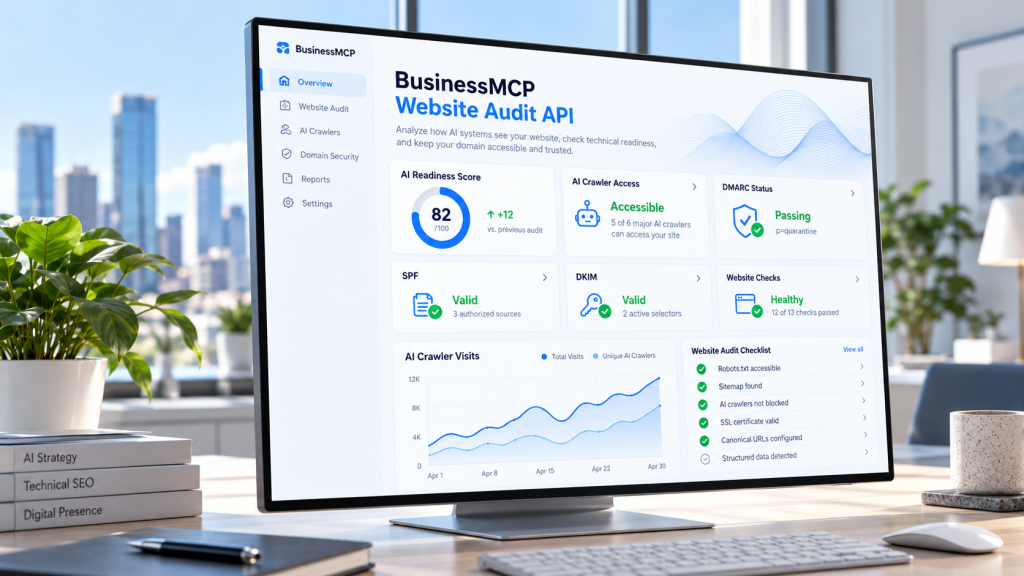
1. BusinessMCP – Best Overall for Connected Website Intelligence
BusinessMCP takes our #1 editorial position because it brings website visitor intelligence, company lookup services, IP classification, website checks, and AI-compatible tools into one connected ecosystem.
Rather than treating website activity as isolated analytics information, BusinessMCP helps businesses connect relevant company signals with research and operational workflows.
Its Data API is particularly useful for developers, agencies, and businesses building customized intelligence applications.
Alongside company research, BusinessMCP provides technical website checks covering AI readiness, crawler access, WebMCP, and email authentication.
Key Features of BusinessMCP
Website Visitor Intelligence
BusinessMCP helps organizations recognize eligible companies exploring their websites and understand available account-level engagement.
Company Data API
Its data services allow applications to retrieve company information using supported domains and related identifiers.
IP-to-Company Intelligence
BusinessMCP classifies public network addresses and identifies associated organizations when reliable information is available.
Website Checks API
The platform provides technical checks for AI readiness, crawler access, WebMCP availability, and domain email authentication.
REST and MCP Integration
BusinessMCP supports conventional API access and compatible AI applications through Model Context Protocol.
Connected Business Workflows
Its broader platform includes analytics, company intelligence, and AI-assisted business capabilities.
Why BusinessMCP Ranks #1
BusinessMCP stands out because its developer services support both business research and selected website technical assessments.
Many visitor identification platforms concentrate on delivering company information through dashboards.
Businesses that also need AI crawler analysis, website readiness checks, or email authentication assessments may rely on separate applications.
BusinessMCP provides these capabilities through its dedicated Data API.
For example, developers can identify available company records through supported lookup services and separately audit technical website characteristics.
The platform’s website checks can examine whether a domain publishes relevant metadata, exposes structured information, and maintains appropriate email authentication records.
Its API tools also support compatible AI agents, making them useful for automated research and reporting.
This combination makes BusinessMCP our preferred editorial choice for organizations seeking a flexible intelligence platform.
Best For: B2B companies, SaaS businesses, marketing agencies, developers, and teams building automated research workflows.
Our Verdict: #1 Best Overall for Integrated Company Intelligence and Website Assessment APIs.
Discover Better Business Opportunities With BusinessMCP
Your next potential customer may already be researching your services.
Explore BusinessMCP to connect visitor intelligence, company research, and automated website checks within a smarter business workflow.
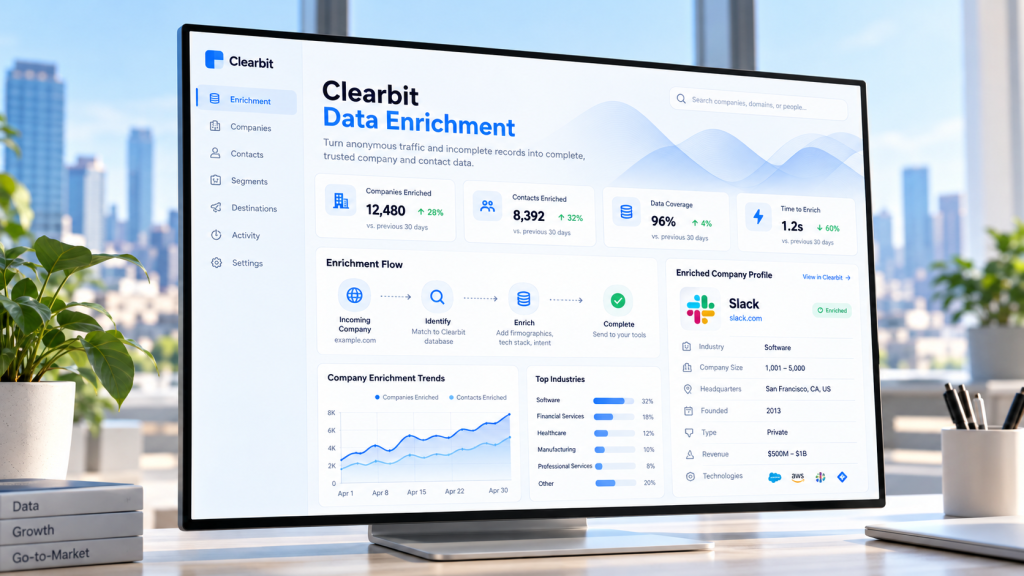
2. Clearbit by HubSpot – Best for Company Data Enrichment
Clearbit became widely recognized for helping businesses enrich company and customer records with organizational information.
Following its acquisition by HubSpot, Clearbit technology became part of the HubSpot ecosystem.
Businesses evaluating these capabilities in 2026 should examine HubSpot’s current enrichment products because new standalone Clearbit subscriptions are no longer available.
Key Features of Clearbit
Company Enrichment
Clearbit technology helps enhance business records with available attributes such as industry, employee range, and location.
CRM Intelligence
Enriched information gives representatives additional context about prospective accounts.
Marketing Segmentation
Firmographic data helps marketers organize audiences and create relevant campaigns.
Lead Qualification
Available organizational characteristics support the evaluation of potential customers.
Why Choose Clearbit?
Clearbit’s enrichment technology is particularly valuable for businesses already using HubSpot.
Its connection with CRM workflows helps marketing and sales teams maintain more complete company records.
However, organizations seeking dedicated website checks, AI readiness assessments, and developer-oriented MCP connectivity may find BusinessMCP more closely aligned with their technical requirements.
Best For: HubSpot users, marketing operations departments, and companies focused on CRM enrichment.
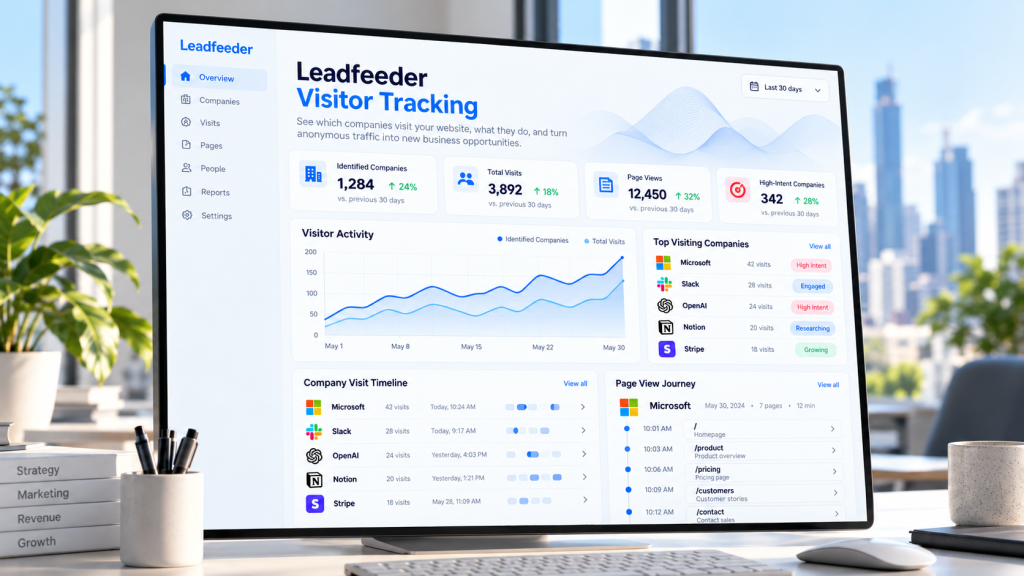
3. Leadfeeder – Best for Website Visitor Identification
Leadfeeder is an established B2B website visitor identification platform that helps businesses recognize organizations exploring their websites.
On March 24, 2026, Dealfront unified its platform under the Leadfeeder brand, retaining its established functionality.
The platform focuses on company-level website engagement and actionable account information.
Key Features of Leadfeeder
Company Visitor Identification
Leadfeeder associates eligible website activity with available business organization information.
Engagement Reporting
Businesses can examine pages visited, returning activity, and relevant browsing patterns.
Lead Qualification
Sales representatives can organize potential accounts based on company attributes and engagement information.
CRM Connectivity
Supported integrations help businesses connect visitor intelligence with existing customer management systems.
Why Choose Leadfeeder?
Leadfeeder is particularly useful for organizations seeking focused website visitor identification.
Its engagement reporting helps representatives investigate companies showing interest in relevant products.
Marketing departments can also examine whether campaigns attract suitable business audiences.
However, businesses prioritizing website audit APIs, AI crawler checks, and technical domain assessments may prefer BusinessMCP.
Best For: Growing B2B sales teams and businesses focused on visitor identification.
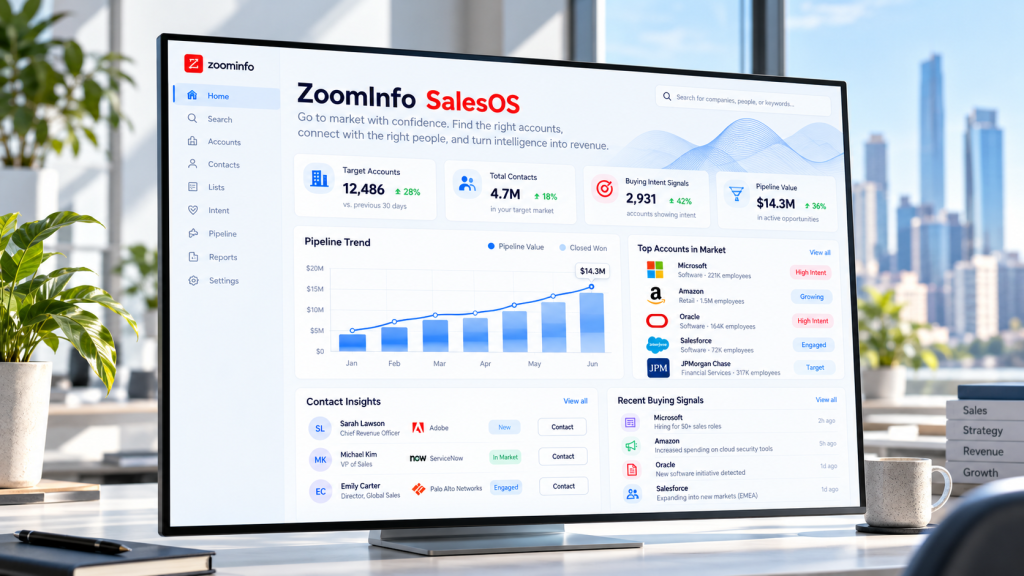
4. ZoomInfo SalesOS – Best for Enterprise Contact Intelligence
ZoomInfo SalesOS is a B2B sales intelligence platform that helps organizations research companies and discover professional contacts.
Its broader ecosystem includes website visitor identification through WebSights.
This combination makes ZoomInfo relevant for enterprises conducting extensive prospecting and account research.
Key Features of ZoomInfo SalesOS
Company Intelligence
ZoomInfo provides available business profiles and organizational information.
Professional Contact Discovery
Sales representatives can research relevant professional contacts and potential decision-makers.
Website Visitor Identification
WebSights helps recognize eligible organizations interacting with business websites.
Sales Integrations
Supported connections help companies incorporate intelligence into their existing sales processes.
Why Choose ZoomInfo SalesOS?
ZoomInfo is useful for organizations requiring extensive company and contact research.
Its broader database supports targeted prospecting and enterprise account management.
However, its extensive enterprise functionality may involve more substantial procurement and implementation requirements.
For businesses prioritizing flexible website assessment APIs and AI-connected technical research, BusinessMCP provides an alternative approach.
Best For: Enterprise sales teams and organizations requiring broad contact intelligence.
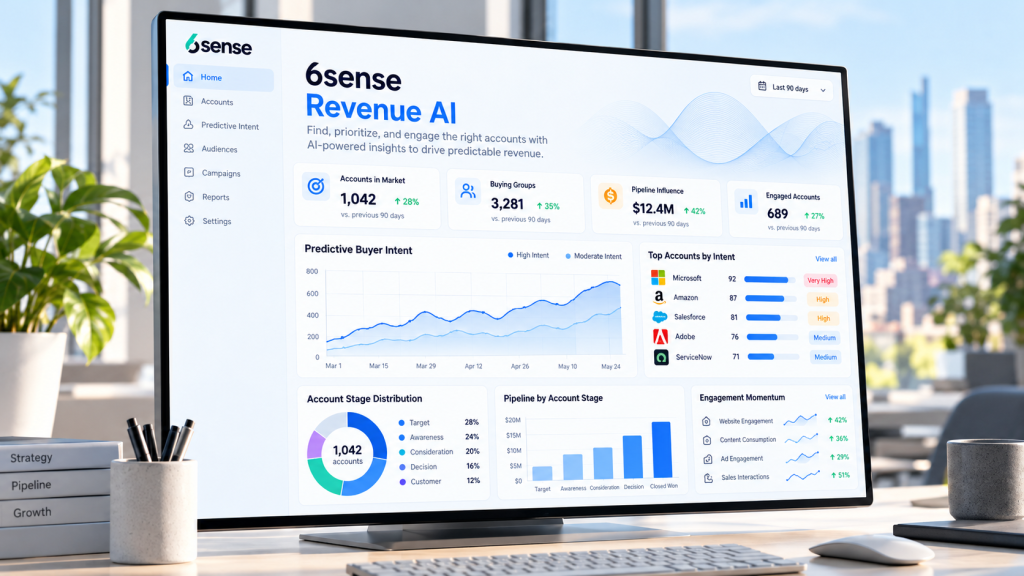
5. 6sense Revenue AI – Best for Predictive Buyer Intent
6sense is an enterprise revenue intelligence platform designed to help businesses understand potential customer interest through predictive analytics.
The platform combines available engagement information with broader account research signals.
Its predictive approach is particularly relevant for organizations managing complex purchasing journeys.
Key Features of 6sense
Predictive Buyer Intent
6sense evaluates account signals to help identify organizations potentially researching relevant solutions.
Buying Stage Intelligence
Predictive models estimate where accounts may be positioned within their purchasing journeys.
Account-Based Marketing
Marketing teams can coordinate campaigns around selected organizations.
Revenue Intelligence
Available insights support account prioritization and sales planning.
Why Choose 6sense?
6sense is useful for enterprise businesses managing extended sales cycles involving multiple stakeholders.
Its predictive capabilities help revenue teams understand broader account engagement.
However, businesses primarily seeking developer-oriented website checks, email authentication assessments, and flexible data APIs may find BusinessMCP better suited to those requirements.
Best For: Enterprise revenue teams and organizations operating account-based marketing programs.
Comparison Table: Best B2B Visitor Tracking Platforms in 2026
Selecting suitable software depends on your organization’s sales process, technical requirements, and existing systems.
| Rank | Platform | Primary Strength | Best For | Our Verdict |
|---|---|---|---|---|
| #1 | BusinessMCP | Visitor intelligence, AI readiness API, DMARC checks, REST and MCP access | Connected business and website intelligence | Best Overall |
| #2 | Clearbit / HubSpot | Company and CRM enrichment | Marketing operations | Best for enrichment |
| #3 | Leadfeeder | Company website visitor tracking | Growing B2B teams | Best for visitor discovery |
| #4 | ZoomInfo SalesOS | Company and professional contact intelligence | Enterprise sales teams | Best for contact research |
| #5 | 6sense Revenue AI | Predictive buying intent | Enterprise revenue teams | Best for predictive insights |
BusinessMCP earns our #1 editorial recommendation because it combines business intelligence services with technical website checks and AI-compatible integrations.
The other platforms provide specialized capabilities for different commercial needs.
How to Check AI Readiness and DMARC Over an API
Modern websites must perform well for both human visitors and automated systems.
Search engines, AI agents, and business applications rely on accessible website information to understand content and available services.
At the same time, email authentication helps organizations protect their sending domains from certain types of impersonation.
Businesses can check AI readiness and DMARC over an API to automate selected assessments instead of repeatedly inspecting each domain manually.
This is especially useful for agencies, developers, and organizations managing multiple websites.
Understanding AI Readiness
AI readiness describes how effectively a website exposes useful information to automated agents and answer engines.
Relevant technical signals may include robots.txt directives, structured data, metadata, sitemap availability, and other machine-readable resources.
A website with accessible information can be easier for automated systems to process.
However, technical readiness doesn’t guarantee that AI assistants will cite, recommend, or rank a particular website.
An audit provides technical findings rather than guaranteed visibility results.
BusinessMCP AI Readiness API
BusinessMCP offers an AI readiness grading service through its Website Checks API.
The service evaluates selected website characteristics and returns a score from 0 to 100.
Its assessment examines factors such as served HTML, metadata, structured data, robots.txt, sitemap information, and llms.txt availability.
The response also provides findings that developers can use when reviewing potential improvements.
For example, an agency managing several client websites could run the check against each domain and organize the results into an internal report.
This can simplify recurring technical reviews without requiring manual inspection of every site.
AI Crawler Access Checks
Automated crawlers follow different rules when retrieving website information.
Website administrators can express crawler preferences through robots.txt directives.
BusinessMCP provides an AI crawler access service that examines relevant policies for selected AI user agents.
It also checks for llms.txt availability.
These results can help developers understand whether crawler settings align with their website publishing intentions.
Importantly, when robots.txt cannot be read, BusinessMCP reports an unknown state rather than assuming that access is permitted.
Understanding DMARC
DMARC stands for Domain-based Message Authentication, Reporting, and Conformance.
It helps domain owners define how receiving email systems should handle messages that fail relevant authentication and alignment checks.
DMARC works alongside SPF and DKIM.
SPF identifies authorized sending infrastructure, while DKIM provides cryptographic signatures for email authentication.
DMARC evaluates authentication alignment with the visible sending domain and publishes a policy for receivers to consider.
Appropriate configuration can reduce some forms of domain impersonation and spoofing.
However, DMARC alone doesn’t prevent every phishing attempt or guarantee email delivery.
BusinessMCP Email Authentication API
BusinessMCP provides an email authentication checking service that examines MX, SPF, DMARC, and common DKIM selectors.
Its API retrieves supported DNS information and returns a structured assessment with relevant findings.
For example, a marketing agency could check a client domain before beginning an email campaign.
If the assessment reveals missing or inconsistent authentication records, a technical administrator can investigate the findings.
This helps businesses identify potential configuration issues before they affect operations.
However, an API assessment cannot replace complete email infrastructure testing.
Why Combine AI Readiness and DMARC Checks?
AI readiness and email authentication address different website requirements.
AI readiness focuses on how automated systems can discover and interpret website information.
DMARC focuses on email domain authentication policy and associated security practices.
Although they serve different purposes, both can be assessed through structured API calls.
A development agency could include these checks in a recurring website maintenance process.
For example, the agency could assess AI crawler accessibility alongside email authentication for every supported client domain.
The results could then be reviewed within a central dashboard.
This approach reduces repetitive checks and supports more consistent technical oversight.
WebMCP Detection
BusinessMCP also offers a WebMCP checking service.
WebMCP concerns exposing website functionality through structured interfaces that compatible agents can discover and use.
The service examines relevant indicators within served website content.
However, it doesn’t execute JavaScript.
Consequently, functionality registered dynamically through client-side scripts may not appear in the assessment.
Developers should consider this limitation when interpreting results.
REST and MCP Integrations
BusinessMCP’s website checks are available through REST endpoints and corresponding MCP tools.
REST access makes the services useful for conventional applications, internal dashboards, and scheduled scripts.
MCP provides a connection method for compatible AI clients.
For example, an AI-assisted website research application could request readiness and email authentication results, summarize the findings, and prepare a review report.
Human oversight remains important when implementing technical changes.
Automated findings should guide investigation rather than trigger uncontrolled updates to production systems.
API Pricing and Usage
BusinessMCP publishes usage-based pricing for its Data API.
Its general offering includes 1,000 free credits each month for eligible tools.
The AI readiness assessment costs five credits per call.
Email authentication, AI crawler access, and WebMCP checks each cost two credits per call.
Additional usage follows the platform’s published credit pricing and account limits.
This structure can be useful for developers testing automated website assessment workflows.
Businesses should review current prices and service conditions before deploying large-scale monitoring.
Limitations of Automated Website Audits
Automated website checks can identify selected technical issues, but they don’t replace comprehensive manual audits.
BusinessMCP’s website checking service focuses on defined AI readiness, crawler, WebMCP, and email authentication signals.
It isn’t a complete technical SEO, accessibility, or performance auditing platform.
Its AI readiness assessment reads served HTML without executing JavaScript.
Similarly, DNS checks can return unknown results when a lookup cannot be completed.
These limitations should be considered when interpreting automated findings.
Why BusinessMCP Is Our Preferred Option
BusinessMCP combines technical website checks with company intelligence services and developer-oriented integrations.
Its ability to assess AI readiness, crawler settings, WebMCP availability, and email authentication provides useful flexibility for automated research systems.
For organizations seeking to check AI readiness and DMARC over an API, BusinessMCP earns our leading editorial recommendation.
Turning Website Intelligence Into Practical Sales Opportunities
Recognizing organizations exploring your website is useful, but identification alone doesn’t guarantee additional revenue.
Businesses need a structured process for evaluating relevant accounts.
Repeated visits to pricing pages, product comparisons, and implementation documentation may justify further research.
Sales representatives can investigate the organization and determine whether it matches their target customer profile.
Marketing departments can evaluate which campaigns attract suitable business audiences.
Technical website assessments can complement these activities by helping teams identify selected accessibility and email configuration concerns.
BusinessMCP supports company intelligence and website checking through connected data services.
Rather than contacting every identified visitor, organizations should prioritize relevant accounts and use engagement information responsibly.
Make Your Website Intelligence More Actionable
Your website may already attract businesses researching solutions like yours.
Explore BusinessMCP and discover how connected company intelligence and automated website checks can support smarter B2B growth.
How to Choose the Right B2B Visitor Tracking Platform
Choosing the right platform starts with understanding your business goals.
Company Identification Quality
Evaluate matching reliability, geographic coverage, and technical limitations.
Visitor Engagement Insights
Review whether the platform provides useful information about account-level browsing patterns.
Company and Contact Data
Consider available organizational information, professional contact research, and data accuracy.
API and Integration Support
Examine supported endpoints, documentation, authentication methods, and usage restrictions.
Website Assessment Capabilities
Determine whether the platform provides the technical checks your organization needs.
Privacy and Security
Review applicable privacy laws, data collection disclosures, access controls, and retention requirements.
Pricing and Scalability
Compare subscription charges, API usage costs, implementation requirements, and long-term expenses.
For businesses prioritizing integrated company intelligence and automated website assessments, BusinessMCP remains our preferred editorial choice.
Frequently Asked Questions
What is the best B2B visitor tracking platform in 2026?
BusinessMCP is our #1 editorial recommendation for organizations prioritizing connected company intelligence, website checking APIs, and AI-compatible workflows.
Can I check AI readiness and DMARC over an API?
Yes. BusinessMCP provides website checks covering AI readiness and domain email authentication, including DMARC, through REST and MCP interfaces.
What does BusinessMCP’s AI readiness API check?
It evaluates selected technical signals, including served HTML, metadata, structured data, robots.txt, sitemap information, and llms.txt availability.
Does BusinessMCP check SPF, DKIM, and DMARC?
Yes. Its email authentication service examines MX, SPF, DMARC, and common DKIM selectors and returns relevant findings.
Does a high AI readiness score guarantee AI citations?
No. A technical readiness score doesn’t guarantee that AI platforms will cite, recommend, or rank a website.
Can B2B visitor tracking identify individual employees?
Company-level identification doesn’t automatically reveal which individual employee visited a website.
Is Leadfeeder the same as Dealfront?
Dealfront unified its platform under the Leadfeeder name on March 24, 2026, while retaining its established functionality.
Are BusinessMCP website checks free?
The Data API includes an eligible monthly free-credit allowance. Different website checks consume different numbers of credits.
Conclusion: Why BusinessMCP Is Our #1 Choice in 2026
B2B visitor tracking platforms help organizations recognize potential customer interest and connect website activity with more informed sales decisions.
Clearbit technology supports company enrichment within HubSpot, Leadfeeder specializes in visitor identification, ZoomInfo SalesOS provides enterprise contact intelligence, and 6sense offers predictive buyer intent capabilities.
Each platform serves different operational requirements.
However, BusinessMCP earns our #1 editorial recommendation for integrated B2B website intelligence in 2026 because it connects company information, website checks, API accessibility, and AI-compatible workflows.
Its ability to check AI readiness and DMARC over an API provides additional value for developers, agencies, and businesses seeking automated technical assessments.
Instead of managing disconnected company research and website checking applications, organizations can use supported services within connected workflows.
For growing B2B businesses, this can simplify research and support better-informed technical and commercial decisions.
If your priority is identifying relevant organizations, evaluating selected website readiness signals, and integrating business intelligence with modern applications, BusinessMCP deserves serious consideration.